Planning a trip becomes easier when you have the right bag to carry your essentials. A travel backpack is a practical choice for weekend getaways, family holidays, business trips, and everyday adventures. It provides space for clothes, toiletries, gadgets, and other important belongings while keeping everything organised.
Travel backpacks are available in different sizes, designs, and materials. Some are suitable for short trips, while others offer additional capacity for longer journeys. Choosing the right one depends on your travel plans, packing habits, comfort, and budget.
In this guide, we will explore the important features to consider before buying a travel backpack and how to find one that suits your needs.
Why Choose a Travel Backpack?
A travel backpack offers flexibility and convenience when moving between destinations. Unlike a traditional suitcase, it can be easier to carry on stairs, uneven paths, and busy streets, provided it fits comfortably and is not overloaded.
Multiple compartments help separate clothes, accessories, documents, and personal items. Some designs also include dedicated pockets for water bottles and small travel essentials.
Whether you are travelling by train, bus, car, or aeroplane, a suitable backpack can help keep your belongings organised throughout your journey.
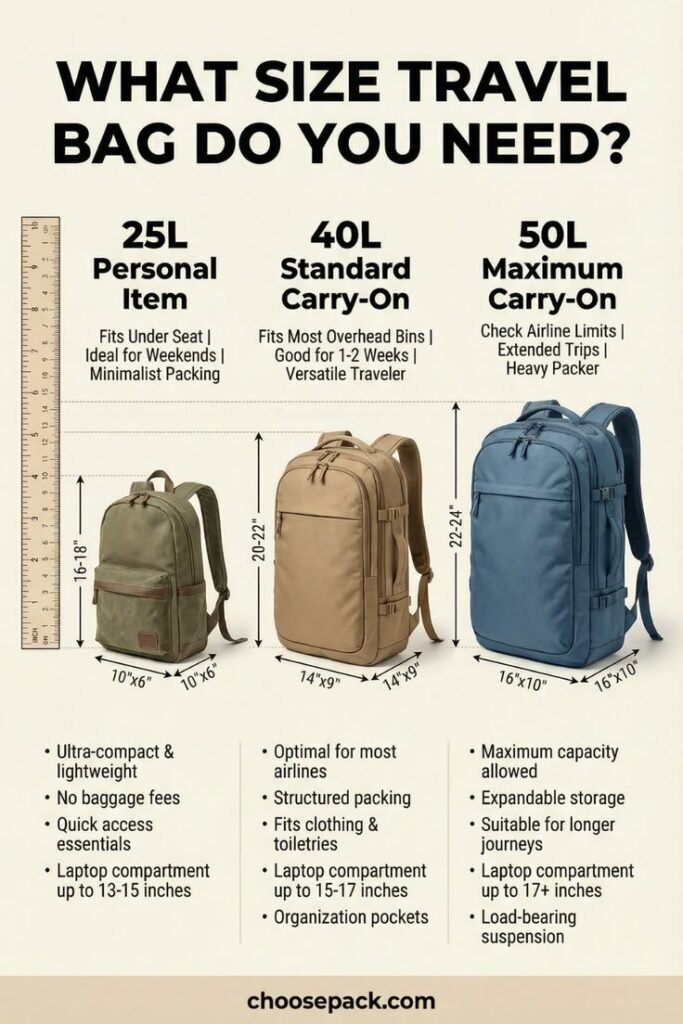
what size traval bag do you need
Important Features to Look for in a Travel Backpack
Capacity is one of the first things to consider when selecting a travel backpack. The right size depends on the duration of your trip and the number of items you need to carry.
Small backpack: Suitable for day trips and carrying a few personal essentials.
Medium backpack: Useful for weekend trips and short journeys.
Large travel backpack: Suitable for longer trips when you need more room for clothing and accessories.
Capacity is commonly measured in litres. Before purchasing, compare the stated capacity with the bag’s dimensions and compartment layout.
2. Look for Multiple Compartments
A well-organised travel backpack makes packing easier. Separate compartments can help you keep clothes, toiletries, documents, chargers, and other belongings organised.
Front pockets are convenient for small items you need to access quickly. Side pockets can be useful for a water bottle or umbrella, depending on their design.
Choose a backpack with a layout that matches your travel routine instead of focusing only on the number of pockets.
3. Check the Material and Build Quality
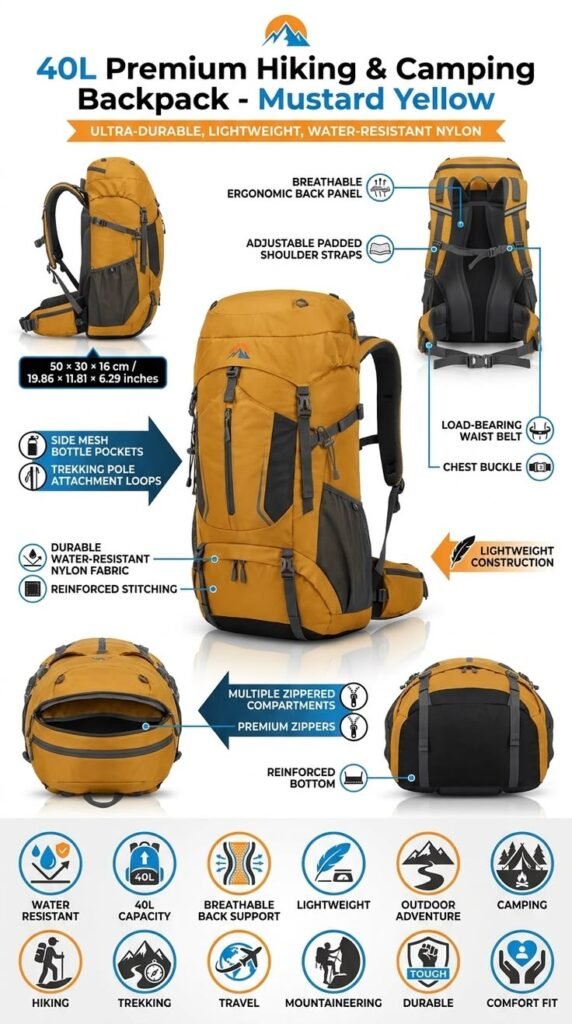
The material affects the backpack’s weight, feel, maintenance, and resistance to everyday wear. Polyester and nylon are commonly used in travel bags, but their performance depends on the quality of the fabric and construction.
Check the stitching, seams, handles, zippers, and shoulder strap attachments before buying. Reinforced stitching at important stress points can be useful when carrying heavier loads.
If you expect to travel in rainy weather, check whether the bag has water-resistant fabric or an included rain cover. Water-resistant does not necessarily mean fully waterproof, so protect electronics and other sensitive belongings separately.
4. Prioritise Comfort
Comfort matters when you carry a backpack for extended periods. Look for adjustable shoulder straps with adequate padding and a back panel that fits comfortably.
A chest strap, when available, may help stabilise the bag during walking. Pack heavier items close to your back and distribute the load evenly.
Avoid carrying unnecessary belongings. A large backpack can become uncomfortable if it is overloaded.
5. Consider Security and Easy Access
During travel, you may need quick access to tickets, identification, a phone, or a wallet. Conveniently placed pockets can help you organise these essentials.
For crowded areas, keep valuables secure and close to you. Lockable zippers or hidden pockets may provide additional convenience if the backpack includes them, but no design can guarantee complete theft protection.